
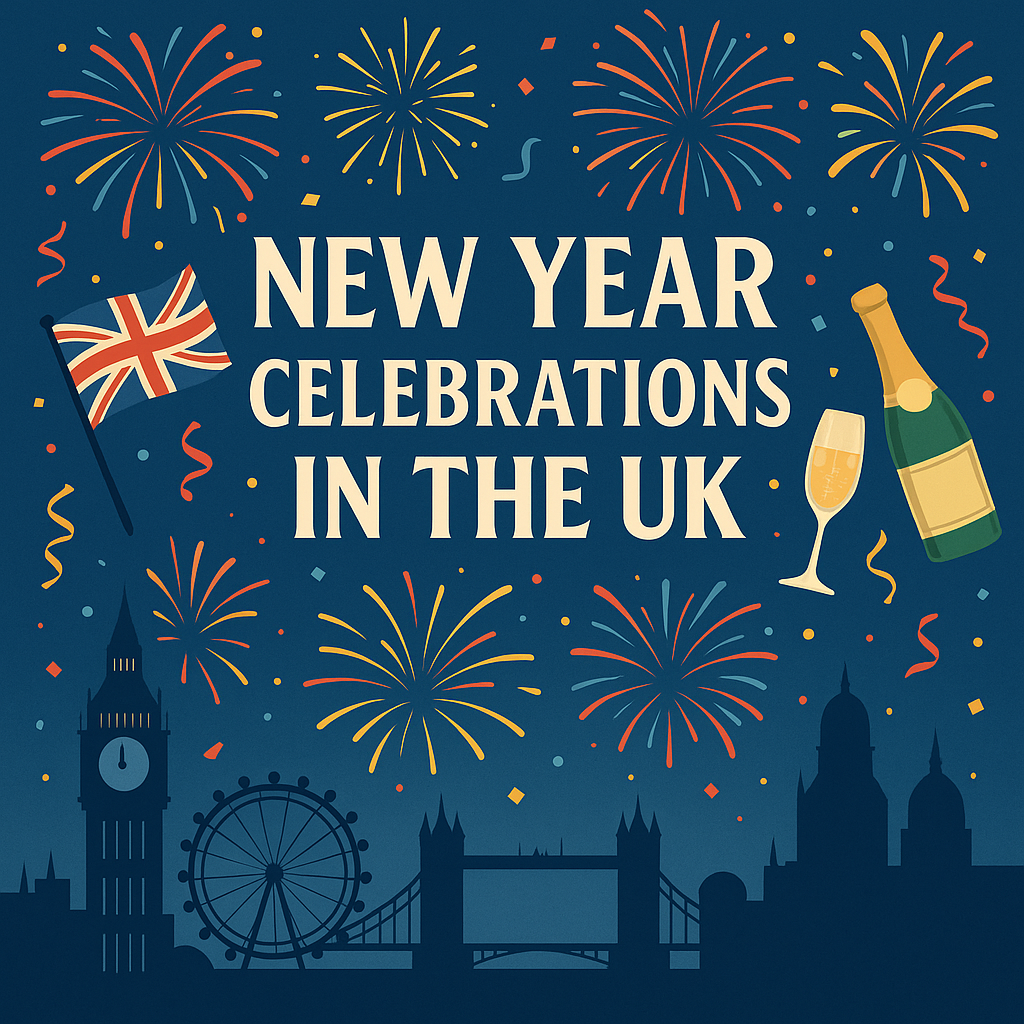
🎆 NEW YEAR CELEBRATIONS IN THE UK
New Year Celebrations in the UK
New year celebrations in the UK mark one of the most culturally rich and emotionally meaningful transitions of the year. Beginning on the night of December 31 and continuing into January 1, this period represents reflection, unity, and the hope of fresh beginnings across England, Scotland, Wales, and Northern Ireland.
Unlike some celebrations driven by modern trends, the New Year in the UK is shaped by a blend of long-standing traditions, community gatherings, and national customs that have evolved over centuries.
New Year’s Eve Traditions in the UK
New Year’s Eve, commonly known as New Year’s Eve or Hogmanay in Scotland, is widely celebrated across the UK. Families and friends gather in homes, pubs, and public spaces to welcome the new year together.
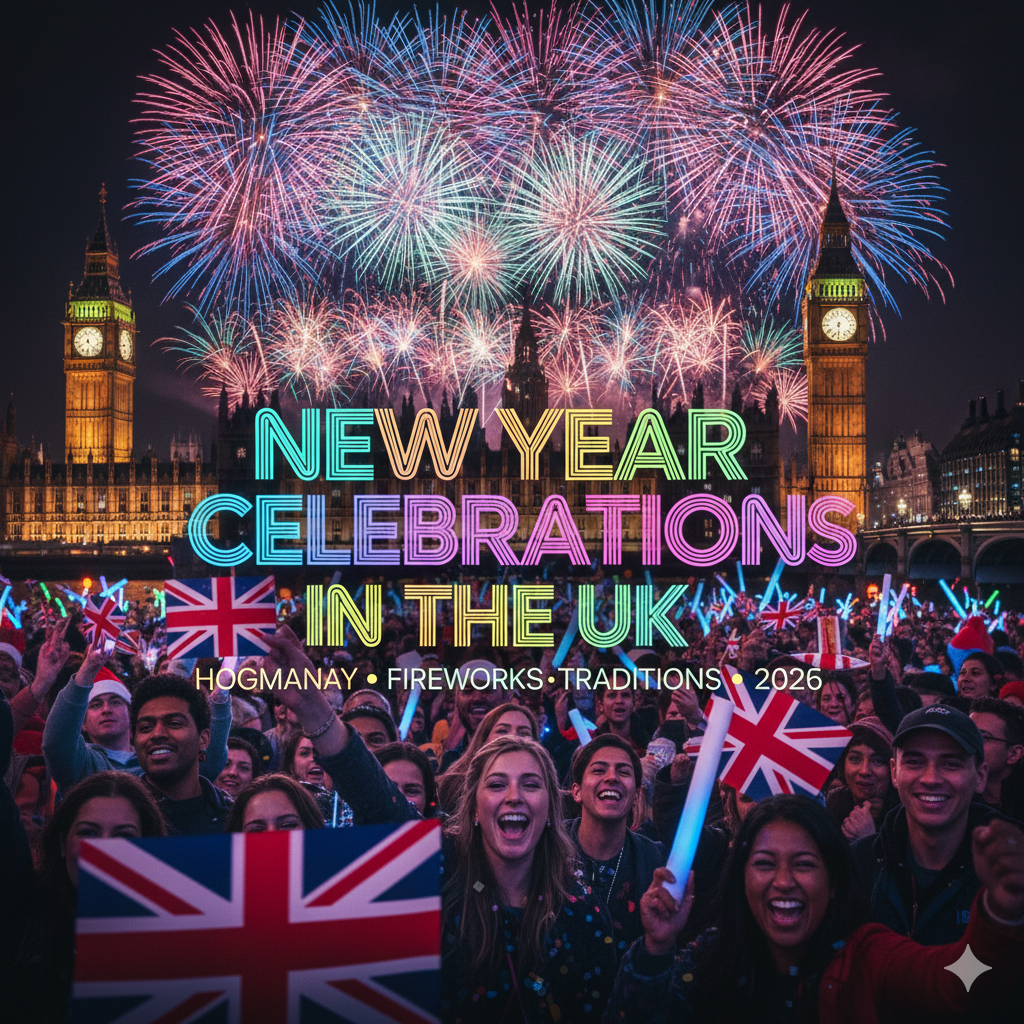
Major cities organize large public events. London’s New Year’s Eve fireworks along the River Thames are among the most famous celebrations, attracting thousands of visitors and millions of viewers worldwide. Iconic landmarks such as Big Ben, the London Eye, and Tower Bridge form a dramatic backdrop for the midnight countdown.
As the clock strikes midnight, people exchange greetings, share hugs, and sing traditional songs, marking the symbolic end of one year and the beginning of another.
Hogmanay: Scotland’s Unique New Year Tradition
In Scotland, Hogmanay holds greater importance than Christmas for many communities. Celebrations often last several days and include street parties, music, dancing, and cultural rituals.
One of the most well-known traditions is “first-footing,” where the first person to enter a home after midnight is believed to bring luck for the coming year. This custom reflects the deep-rooted belief in renewal and good fortune associated with the new year.
Hogmanay highlights how New Year celebrations in the UK can vary by region while still sharing a common emotional purpose.
January 1: A Public Holiday and Day of Reflection
January 1 is a public holiday across the United Kingdom. After the excitement of New Year’s Eve, the day itself is quieter and more reflective.
People typically use New Year’s Day to:
- Rest and recover from celebrations
- Spend time with family
- Reflect on the past year
- Set personal goals and resolutions
In many households, January 1 is associated with calm routines, traditional meals, and peaceful activities such as walking, watching television, or visiting relatives.
Cultural Meaning of the New Year in British Society
The New Year carries strong symbolic meaning in British culture. It represents closure, continuity, and the belief that time offers renewal. While resolutions are common, the focus is often on practical improvements—health, work-life balance, and personal responsibility.
The idea of “turning over a new leaf” resonates strongly in British society, reinforcing the importance of self-reflection and steady progress rather than dramatic change.
Community and Social Celebrations
Community events play a significant role in New Year celebrations in the UK. Towns and cities organize concerts, parades, and fireworks displays that bring people together regardless of background.
Pubs and local venues become social hubs, offering live music and shared celebrations. These gatherings reflect the UK’s strong community culture, where shared experience often matters more than spectacle.
New Year Traditions Across the UK
Different regions observe unique customs:
- England: Public fireworks, countdowns, and family gatherings
- Scotland: Hogmanay celebrations, first-footing, and street festivals
- Wales: Community singing and cultural performances
- Northern Ireland: Family gatherings and public events
These variations demonstrate how tradition and regional identity shape the way the new year is welcomed.
Why the New Year Still Matters in the UK
From an E.E.A.T. standpoint, New Year celebrations in the UK are significant because:
- They are historically documented across centuries
- Recognized through national public holidays
- Consistently practiced by the population
- Reflected in government schedules, media, and public life
These celebrations are not speculative or trend-based. They are rooted in real human behavior, repeated annually, and trusted across generations.
Conclusion
The new year celebrations in the UK reflect tradition, community, and renewal. From the energy of New Year’s Eve fireworks to the calm reflection of January 1, this period connects people through shared customs and cultural continuity.
More than a celebration, the New Year in the UK is a reminder that time offers both closure and opportunity—encouraging individuals and communities alike to move forward with hope and purpose.