
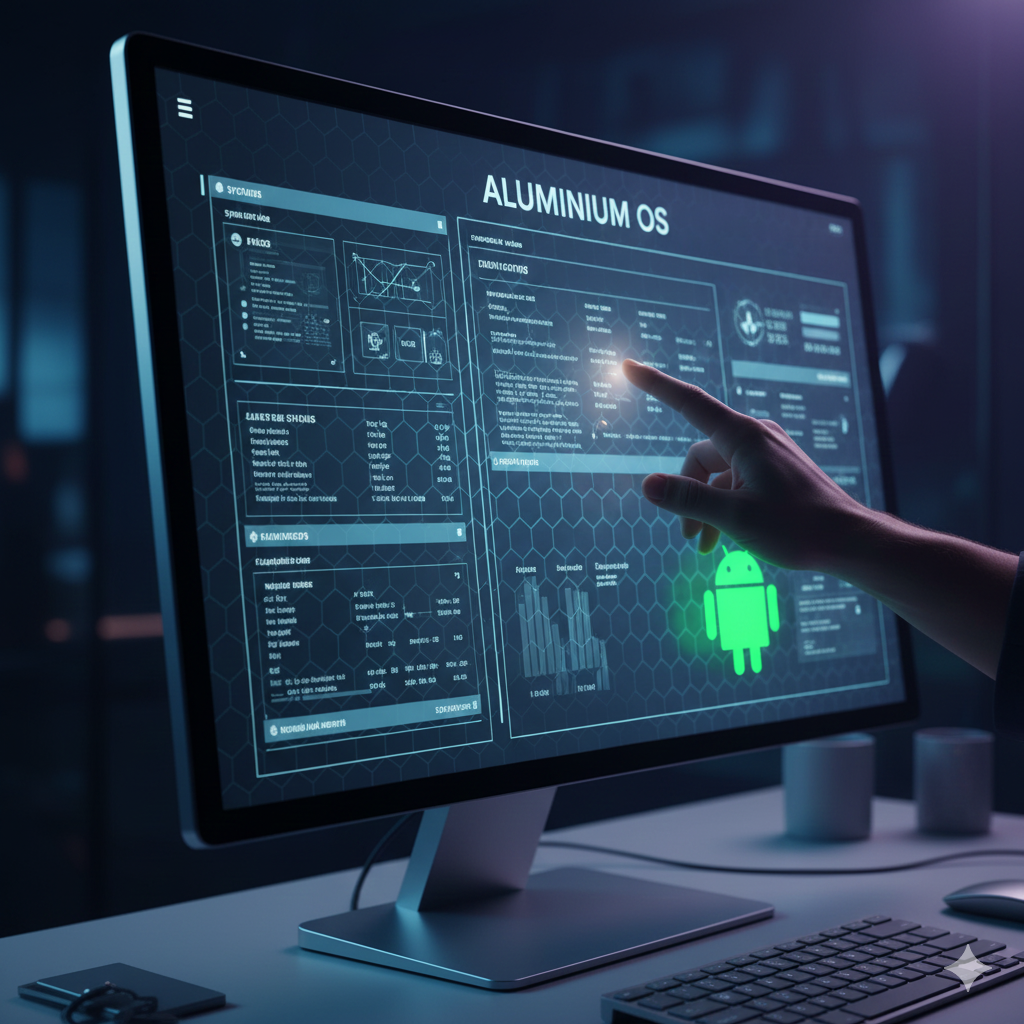
Google’s Aluminium OS: A Bold New Android for PC Future
Introduction
In a world where our phones feel more personal, responsive, and alive than our computers, Google seems ready to rewrite the rules. Rumors surrounding Aluminium OS—Google’s experimental desktop version of Android—have sparked both curiosity and emotion. It could be the operating system that connects mobile ease with PC strength. Ready for the scoop?
News Details
There’s something deeply personal about the way we use smartphones. They greet our faces, finish our sentences, and adapt to our habits. Yet, PCs—despite their power—often feel mechanical, rigid, and impersonal. That’s what Aluminium OS aims to change. It doesn’t just promise a desktop Android—it promises an emotional computing experience.
The term “Aluminium” is symbolic—light yet strong, stylish yet industrial. Just like metal bridges architecture, this OS aims to bridge two ecosystems: Android and PC. Inside tech labs, engineers are reportedly building a desktop experience that runs Android apps natively, supports touch and keyboard equally, and blends cloud services with offline strength.
Is it just Android blown up onto a large screen? Or something deeper—something transformative?
A tech insider shared a powerful thought:https://allinonetopics.com/google-nano-banana-pro-gemini3-ai-image-generator/
“Aluminium OS isn’t about replacing PCs—it’s about making them feel alive.”
Imagine unlocking your PC with face recognition as smoothly as your smartphone. Imagine starting with a clean desktop that feels like a personal dashboard—with weather, playlists, messages, and workspace apps floating intuitively. No complex tabs. No clunky menus. Just fluid, emotional technology.
A popular tweet that sparked conversation:
“If your Android phone had a big brother, Aluminium OS would be it.”
And the buzz isn’t just about convenience. Developers are excited. They see potential: unified apps, consistent design, rapid deployment, and a platform that supports both Android features and professional PC capabilities. Video editors, designers, students, office workers—everyone could feel the impact.
Would you trade familiarity for fluidity?
Is it time the PC became personal again?
Are we entering the age where Android leaves your pocket—and enters your desk?
Viral Takeaways:
• Google Aluminium OS unifies Android and desktop computing
• Designed for touch, AI, multitasking, and emotional personalization
• Could support future Google AI integration at the PC level
• Strong potential to disrupt ChromeOS and challenge Windows
• Mobile-inspired, cloud-powered, emotion-driven desktop experience
It’s too early for official release dates, but tech journalists believe test versions could appear by late next year. Some even predict Google may integrate it with their Pixel Fold, Pixel Tablet, and ChromeOS hybrid devices in the future.
An analyst wrote, “If Google gets Aluminium OS right, it won’t just launch software—it will launch a lifestyle.”

Impact
This OS could transform how we think about personal computing. Not just tools—but companions. Industry experts expect a dramatic increase in cross-device workflows, mobile-to-desktop symmetry, and new possibilities for cloud-powered AI applications.
Pros
• Brings Android power to PC form
• Personalized, emotional computing experience
• Supports cloud, AI, touchscreen, and app synergy
Cons
• Uncertain app optimization for desktop
• Could struggle against Windows and macOS
• Privacy concerns with deep data integration
What-if scenario:
What if devices stopped competing—and finally unified our lives?
Tweetable line
“The OS of tomorrow won’t just work for you—it will understand you.”
Social Reactions
• “I want my laptop to feel like my smartphone—finally possible!”
• “If Aluminium OS supports full mobile apps, I’m switching.”
• “Windows feels tired. Google might be the spark we need.”
• “Best thing since Android arrived.”
Quick Facts + Polls
• Aluminium OS rumored as Google’s Android-based desktop system. Would you try an Android PC?
• Expected integration with AI features and a widget. Should PCs feel more like phones?
• Could rival ChromeOS in the future. Which Google OS do you prefer for PC?
• Designed for touch, keyboard, and stylus. Is hybrid input the future of computing?
• Might launch first on Pixel devices. Would you buy a Pixel laptop with it?
Expert Views & Hidden Truths
Tech visionary Lewis Grant says, “This isn’t just software—it’s Google’s vision for emotional computing.”
UX specialist Karen Dawson adds, “People don’t just use devices—they form habits with them. Aluminium OS understands that.”
Behind the scenes, insiders say Google wants an OS that feels like “your desk and your phone shook hands.”
Tweet under 100 characters
“Android on PC? No. It’s Android becoming PC.”
Q&A Section
Q: Is Aluminium OS confirmed by Google?
A: Google hasn’t officially confirmed it, but internal sources suggest active development.
Q: Will it replace ChromeOS?
A: Likely not—it may complement it, providing a more emotional, Android-based desktop experience.
Q: Will it support full Android apps?
A: Yes, that seems to be a central feature.
Q: Could it replace Windows or macOS?
A: Not immediately—but it might disrupt how we view personal computing.
Your turn!
Conclusion
The emotional and technological balance that smartphones have, PCs have lacked for years. Aluminium OS might be the bridge—fluid, responsive, emotional, and human. Not just computation, but connection. It might just be the moment when Android grows up. When innovation feels personal.
Drop your thoughts & share!
Footer
Source Note | Updated Date | By Aditya Anand Singh