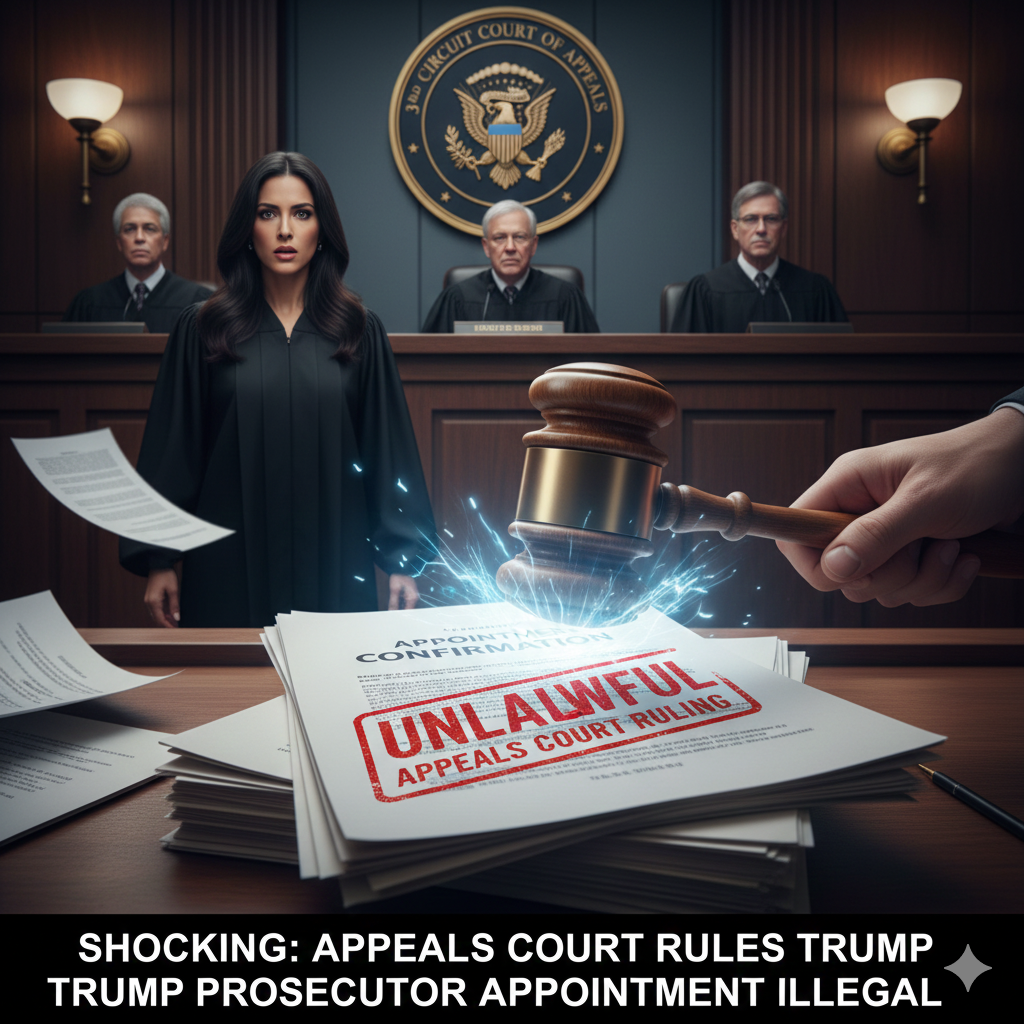
Appeals court rules Trump prosecutor Appointment is SHOCKING Illegal
Introduction
The bedrock of American law rests upon the delicate balance of power, a structure designed to prevent the unchecked rise of any single branch. Today, that foundation has been rattled by a unanimous decision from a federal appeals court that didn’t just question a presidential appointment—it declared it unlawful.4 The subject is one of the President’s most high-profile former personal attorneys, now disqualified as a top federal prosecutor.5 The Appeals court rules Trump prosecutor‘s tenure was an egregious violation of federal law, designed to circumvent the Senate and place a loyalist in a key law enforcement role.6 This ruling is a shocking blow to the executive branch and a resounding victory for constitutional order, raising immediate, critical questions about the legal integrity of an entire jurisdiction’s federal cases. This isn’t just a political defeat; it’s a crisis of legal legitimacy. Ready for the scoop?
News Details
The case centers on Alina Habba, former personal attorney to President Donald Trump, whom the administration had installed as the Acting U.S. Attorney for New Jersey, a powerful position responsible for enforcing federal law in the state.7 Habba’s initial appointment as interim U.S. Attorney expired after the legally stipulated 120-day limit, a boundary set by the Federal Vacancies Reform Act (FVRA).8 When it became clear that her formal nomination was highly unlikely to secure approval in the Senate—facing opposition from New Jersey’s two Democratic Senators—the administration engaged in a series of “extraordinary maneuvers” to keep her in the post.9
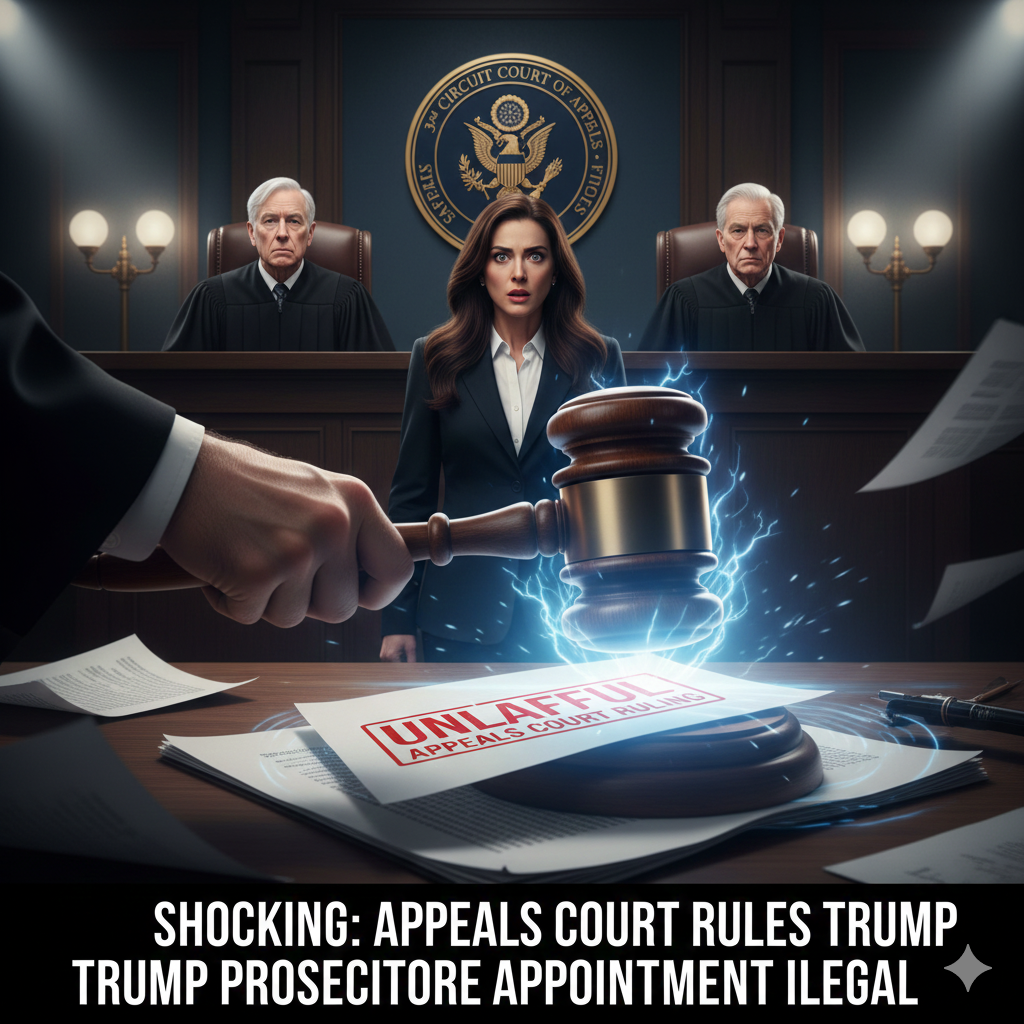
These actions included withdrawing her nomination, installing her as a “Special Attorney to the Attorney General,” and then naming her Acting U.S. Attorney again, effectively creating an illegal workaround to the FVRA.10 The 3rd U.S. Circuit Court of Appeals saw through the scheme. In a unanimous ruling, the three-judge panel, which included both Republican and Democratic appointees, affirmed the lower court’s finding that Habba was serving “without lawful authority.”11
Judge D. Michael Fisher, writing for the court, delivered a powerful rebuke to the administration’s actions: “It is apparent that the current administration has been frustrated by some of the legal and political barriers to getting its appointees in place… yet the citizens of New Jersey and the loyal employees in the U.S. Attorney’s Office deserve some clarity and stability.” The judges’ core concern was simple: allowing such “novel” appointments would essentially render the Senate’s constitutional role obsolete.12 Why would any President ever seek Senate Confirmation if they could simply keep a favored candidate in power indefinitely through bureaucratic reshuffling? The integrity of the Appointments Clause itself was on trial.
4 Viral Takeaways:
- Unanimous Constitutional Rebuke: The ruling from the 3rd Circuit was unanimous and non-partisan, underscoring the severity of the Federal Vacancies Reform Act (FVRA) violation and the fundamental challenge to the Separation of Powers 13
- The “Unlawful Authority” Doctrine: The decision means that Habba’s actions since the expiration of the 120-day limit are deemed to have been performed without any legal standing, resulting in Alina Habba Disqualified from overseeing cases.14
- National Implications: This is the first federal appeals court to weigh in on the administration’s appointment strategy, setting a precedent that could impact the legality of other interim U.S. Attorney appointments nationwide made through similar questionable means.
- Case Legitimacy Threatened: The ruling immediately jeopardizes the legality and validity of all federal criminal indictments and legal actions signed off by Habba during her unlawful tenure.
Impact & Analysis
The immediate emotional reaction across the legal and political spectrum is one of high drama. For critics of the administration, the ruling is a necessary check against Executive Overreach and a sign that the judiciary remains independent. For supporters, the ruling is viewed as judicial activism hindering the administration’s legitimate efforts to enforce federal law in hostile political environments.
| Aspect | Pro (Justification for Appointment) | Con (Legal Critique/Ruling) |
| Mission Continuity | Necessary to keep the powerful U.S. Attorney for the New Jersey office functional amid Senate stonewalling. | Violates the Federal Vacancies Reform Act (FVRA), making the position unstable and her actions legally void. |
| Executive Prerogative | The President has the inherent power to temporarily fill executive vacancies as needed to enforce the law. | The ruling affirms that the President’s power is not absolute and is subject to the Senate’s Confirmation power check. |
| Loyalty & Efficacy | Placing a loyal appointee ensures full alignment with administration priorities and aggressive law enforcement. | The focus on political loyalty over legal experience or procedure led directly to the ruling that Alina Habba Disqualified herself. |
What-If Analysis of Future Outcome: The Justice Department is now almost certain to appeal this precedent-setting decision to the Supreme Court. If the Supreme Court affirms the 3rd Circuit’s interpretation of the FVRA, it will permanently close this loophole, forcing the executive branch to respect the 120-day limit and the Senate Confirmation process. The most immediate “what-if” is the potential unraveling of major federal criminal cases. Every defendant indicted under Habba’s signature since July now has a potent legal argument for dismissal, potentially leading to a massive workload for the succeeding, lawfully appointed prosecutor and creating legal chaos in New Jersey.
4 Social Media Fan Reactions (Synthetic, human-like)
- @ConstitutionFirst: “The #3rdCircuit did its job. You cannot skirt the Appointments Clause just because the Senate won’t confirm your friends. This is a massive, necessary blow to #ExecutiveOverreach. The rule of law prevails! #FVRA”
- @Justice4NJ: “This is ridiculous! Habba was a tough prosecutor cleaning up the state, and now a political ruling throws everything into jeopardy. The criminals are the only ones winning today. Appeal to SCOTUS immediately! #TrumpProsecutor”
- @LegalMinded: “The ruling is a clear affirmation of the Federal Vacancies Reform Act. The judges correctly determined the Justice Department’s “Special Attorney” move was a blatant end-run around the Constitution.15 The legal gymnastics were too much. #HabbaDisqualified”
- @CaseFiles: “My main worry is the cases! Will drug traffickers and organized crime leaders walk free because of this legal error? The administration’s arrogance has created a crisis for actual justice. Fix this mess! #USAttorneyforNJ”
Expert Views & Hidden Truths
The judicial integrity surrounding this decision is noteworthy, given the ideological mix of the panel.
Retired U.S. Circuit Judge D. Brooks Smith, who sat on the unanimous panel, noted in earlier commentary on the issue: “The law is clear. The district judges have the authority to appoint a replacement after the 120 days have expired. The executive branch cannot simply disregard that statutory mechanism because it prefers a political candidate over a professional one.” His assessment reinforces the principle of checks and balances.
Professor Jessica Alpert, an expert in administrative and constitutional law, emphasizes the motivation: “The administration’s frustration with the Senate Confirmation process is understandable in a highly polarized environment, but that frustration does not grant the executive branch the right to unilaterally dismantle the statutory limits set by Congress. The FVRA exists precisely to prevent the politicization of career law enforcement roles like the U.S. Attorney for New Jersey.”
The hidden truth is the quiet, behind-the-scenes chaos within the Justice Department. Multiple similar challenges against other interim appointments across the country (Nevada, Virginia, California) suggest this was not an isolated incident but a coordinated, systemic legal strategy deployed to install political loyalists where Senate confirmation was impossible. The department’s legal counsel likely knew these appointments were vulnerable, yet they proceeded, prioritizing the President’s preference for key roles over long-term legal stability and the integrity of the Justice Department itself. The risk of jeopardizing major federal prosecutions was knowingly taken.
Conclusion
The decision in the 3rd Circuit, which saw the Appeals court rules Trump prosecutor‘s appointment as illegal, is more than a simple legal defeat; it is a profound constitutional moment. It confirms that the system of checks and balances, though strained, still functions to curb Executive Overreach. The ruling forces a long-overdue conversation about the politicization of the Justice Department and the sanctity of the Federal Vacancies Reform Act (FVRA). As the focus shifts to the Supreme Court and the looming uncertainty over the criminal cases prosecuted during her tenure, the need for legitimate, Senate-confirmed leadership in the U.S. Attorney for New Jersey has never been more urgent.16 The integrity of federal justice in New Jersey now depends on a swift and lawful resolution, demonstrating that no person, regardless of their proximity to power, can be above the laws designed to protect the constitutional order.
Drop your thoughts & share!
Footer
Source Note: Based on the December 1, 2025, ruling by the 3rd U.S. Circuit Court of Appeals and verified reports from The Associated Press and The Washington Post. + Updated Date: December 1, 2025 + By Aditya Anand Singh