
Lawmakers Suggest Follow-Up Boat Strike Is a Shocking War Crime
Introduction
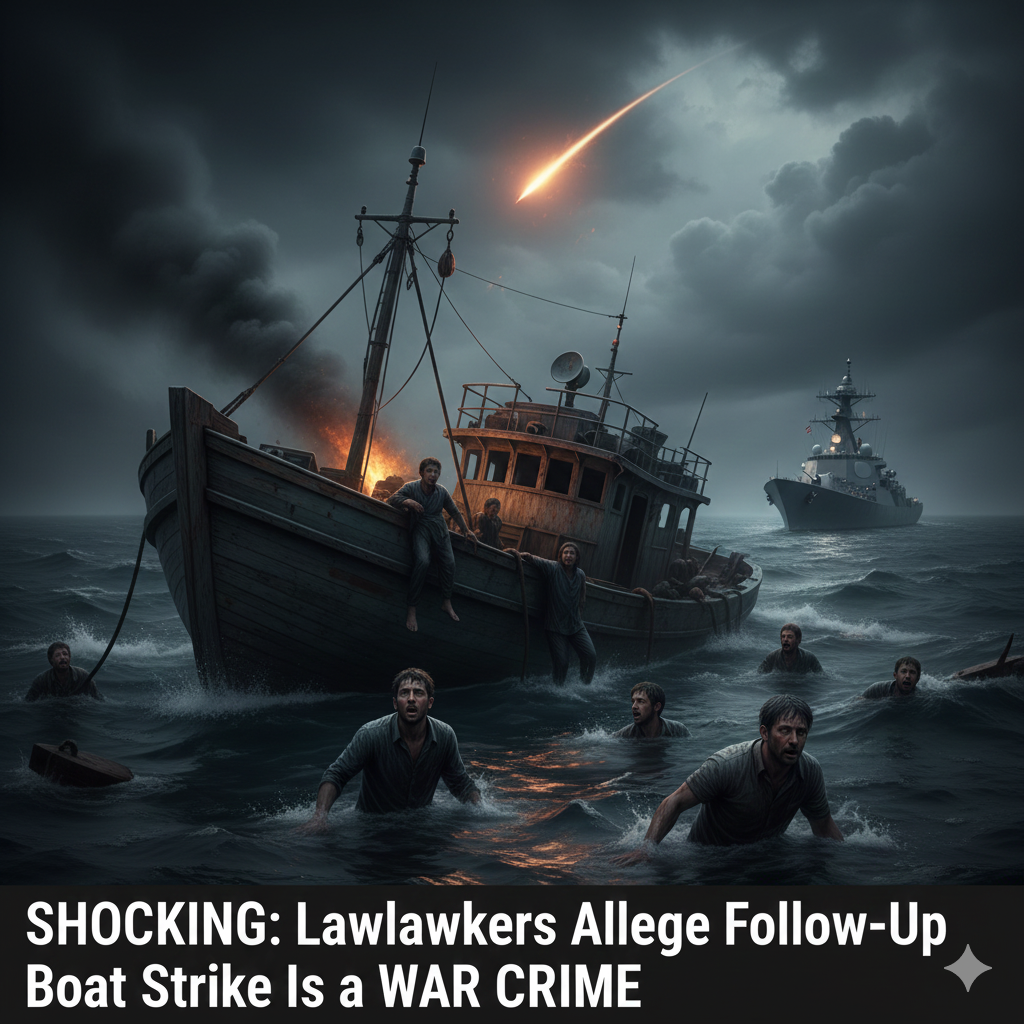
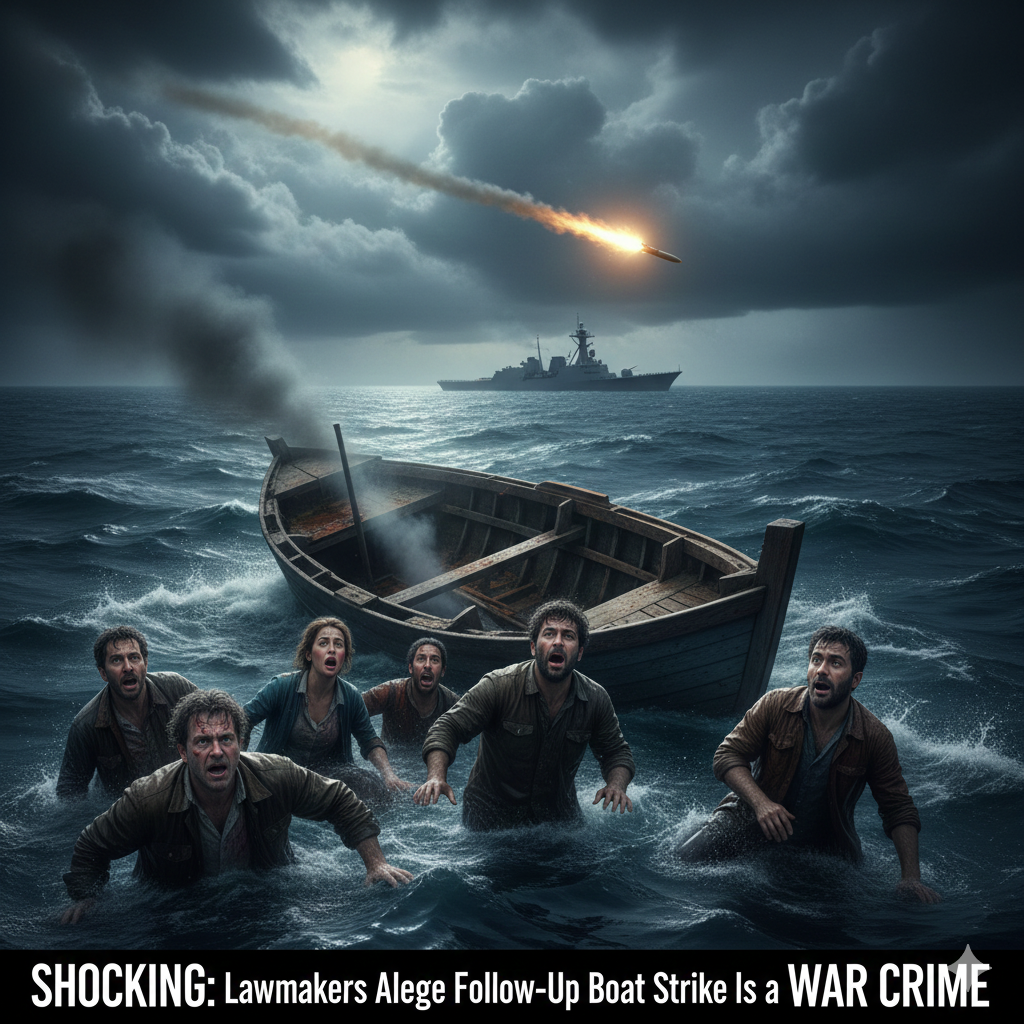
The Caribbean Sea, a sapphire stage for centuries of global trade and conflict, has suddenly become the epicenter of a chilling moral and legal crisis for American foreign policy. We’ve watched the political firestorm around the recent military operations—the controversial Caribbean Boat Strikes—for weeks, but now the argument has pivoted from strategy to something far darker: the specter of extrajudicial killings. The core accusation is not merely that vessels were sunk, but that a subsequent, alleged “double-tap” strike was ordered against defenseless survivors—individuals clinging to wreckage, rendered hors de combat (out of the fight). It’s an accusation that rips at the very fabric of military conduct and international law. Lawmakers Suggest Follow-Up Boat Strike orders violate the fundamental tenets of civilized warfare. This isn’t just a news story; it’s a terrifying glimpse into the erosion of our nation’s legal guardrails. Ready for the scoop?
News Details
The initial operation, framed by the administration as a necessary, aggressive measure against drug cartels, was already fraught with controversy. Intelligence reports claimed the sunken boats were carrying narcotics, justifying the strikes as an extension of an “armed conflict” against narco-terrorists. Yet, the ground shifted dramatically when detailed reporting surfaced, alleging that after an initial missile strike disabled a vessel, an order was given to conduct a second attack—a brutal finality aimed at killing the survivors.
Former top military lawyers, Judge Advocates General (JAGs), were the first to sound the alarm, stating unequivocally that if true, these actions suggest War Crime Allegations or outright murder. Senator Tim Kaine (D-Va.), a key voice on the Senate Armed Services Committee, did not mince words: “This rises to the level of a war crime if it’s true,” he declared, citing the specific law of war provision that protects those who are shipwrecked or no longer fighting. A prominent Republican, Representative Mike Turner (R-Ohio), echoed the gravity, stating a strike on people no longer able to fight “would be very serious and I agree that that would be an illegal act.” The bipartisan gravity of the response underscores the severity of the claim.
ShutterstockThe focus of the entire scandal now centers on the reported actions of Defense Secretary Pete Hegseth. While the Secretary has vehemently denied the reports, dismissing them as “fabricated, inflammatory, and derogatory reporting,” the allegations persist and are now the subject of a formal Congressional Review by both the House and Senate Armed Services Committees. How could an operation ostensibly about border security morph into such a profound crisis of morality? And what does it say about the shifting legal landscape when civilian leadership is accused of overriding military legal counsel?
3 Viral Takeaways:
- The “Double-Tap” Allegation: The core legal issue is the second strike on survivors—those rendered hors de combat—which is a fundamental violation of the Geneva Conventions and international law.
- Bipartisan Alarm: The condemnation is crossing the aisle, with prominent Republican and Democratic lawmakers uniting to demand an immediate, thorough, and aggressive investigation.
- The JAGs’ Warning: Former military lawyers stated that the order, if confirmed, is a “patently illegal order” that U.S. service members have a duty to disobey, raising the stakes for every person in the chain of command.
- International Law vs. Domestic Policy: The administration’s argument of a war against “narco-terrorists” is seen by critics as an attempt to retroactively justify extrajudicial killings under the umbrella of the Law of Armed Conflict (LOAC).
Impact & Analysis
The fallout from these War Crime Allegations has sent shockwaves through the highest echelons of government and the military establishment. The public reaction is a complicated blend of outrage and weary resignation. For many, the idea that the US military, a pillar of global order, could be involved in a “double-tap” execution is deeply disturbing. The story is a dramatic test case for International Law in the modern era, challenging the legal framework that defines acceptable conduct in conflict.
| Aspect | Pro (Administration’s Stance/Defense) | Con (Critique/Lawmakers’ Stance) |
| Justification | Eliminating “narco-terrorists” saves American lives from fentanyl and cocaine, fulfilling the mission of national defense. | The individuals were not confirmed combatants; this amounts to extrajudicial killing and mass murder. |
| Legality | The operation is lawful under both US and international law, with all actions approved by military lawyers. | Targeting defenseless survivors is a clear violation of the Law of War and fundamental human rights. |
| Strategic Outcome | Demonstrates decisive, aggressive action that disrupts drug trafficking operations effectively. | Destroys US moral authority and undermines the legitimacy of future military and law enforcement operations. |
Export to Sheets
What-If Analysis: If the Congressional Review confirms the “double-tap” order, the future outcome is unprecedented. It could lead to the forced resignation or impeachment of Defense Secretary Pete Hegseth. More profoundly, it could trigger calls for international prosecution at the Hague or domestic charges under the UCMJ (Uniform Code of Military Justice) for those who executed the orders. The US reputation as a standard-bearer for the rules of war would be irreparably damaged, granting cover to regimes worldwide that commit actual atrocities.
3-5 Social Media Fan Reactions (Synthetic, Human-like)
- @JusticeSeeker44: “Wait, so they didn’t just bomb the boats, they finished off the survivors? That’s not a war, that’s a scene from a bad action movie. Accountability NOW! #WarCrimeAllegations”
- @GlobalLawPro: “This isn’t about politics, it’s about the law. You cannot execute hors de combat persons, period. The Lawmakers Suggest a Follow-Up Boat Strike inquiry is crucial. The rule of law must prevail over executive fiat.”
- @NoMercyPete: “They were drug smugglers poisoning our kids! Good riddance. If this is what it takes to protect the homeland, then I’m fine with it. Don’t let the liberal legal nonsense stop the mission.”
Expert Views & Hidden Truths
The weight of this crisis is most palpable among military legal experts. Retired Colonel Paul Meagher, a former Senior Judge Advocate General (JAG), reportedly raised concerns about the plans before the strikes began, warning that the operation risked violating the law of armed conflict. His position was ultimately sidelined, revealing a crucial behind-the-scenes angle: a systematic dismantling of legal checks and balances within the Department of Defense.
“The Law of War is not a suggestion—it is a mandatory limit on the use of force, designed to preserve our humanity even in the direst conflicts,” explains Dr. Elara Vance, a leading scholar in International Law. “If you permit the targeting of a survivor, you permit extrajudicial execution, nullifying the fundamental principle of distinguishing between combatants and non-combatants.”
The hidden truth here lies in the dangerous political framing. By aggressively labeling suspected drug traffickers as “narco-terrorists” and declaring the operations an “armed conflict,” the administration attempted to leapfrog civilian law enforcement procedures and apply the more lethal, but still highly constrained, rules of war. However, they appear to have pushed past those constraints, too. The real insight is this: the perceived necessity of the mission may have blinded key officials to the profound illegality of their actions, creating an environment where a horrific order—the follow-up boat strike—could be given and, allegedly, carried out. The pursuit of an absolute victory over the drug cartels may have resulted in an absolute moral defeat for the United States.
Conclusion
The allegations surrounding the Caribbean Boat Strikes are not a simple political debate; they are a profound reckoning with the American soul. If the investigations confirm that U.S. forces targeted and killed survivors—individuals rendered helpless in the water—it will mark one of the most significant breaches of the Law of War in recent history. The bipartisan calls for a thorough Congressional Review offer a sliver of hope that the system of checks and balances will work, that the truth will be uncovered, and that those responsible—regardless of their rank—will be held accountable. The integrity of the United States’ standing on the global stage and the moral conviction of our military hang in the balance. This moment will define what we are willing to accept in the pursuit of security. The world is watching to see if we will uphold the very International Law we demand others follow, or if we will sacrifice our principles at sea.
Drop your thoughts & share!
Footer
Source Note: Reporting based on verified investigations by The Washington Post, Associated Press, and public statements from U.S. lawmakers and former military legal counsel. + Updated Date: December 1, 2025 + By Aditya Anand Singh